

Market Review: Koris and the Top 10 Solid Surface Counter for Kitchen Brands Supporting Global Distribution
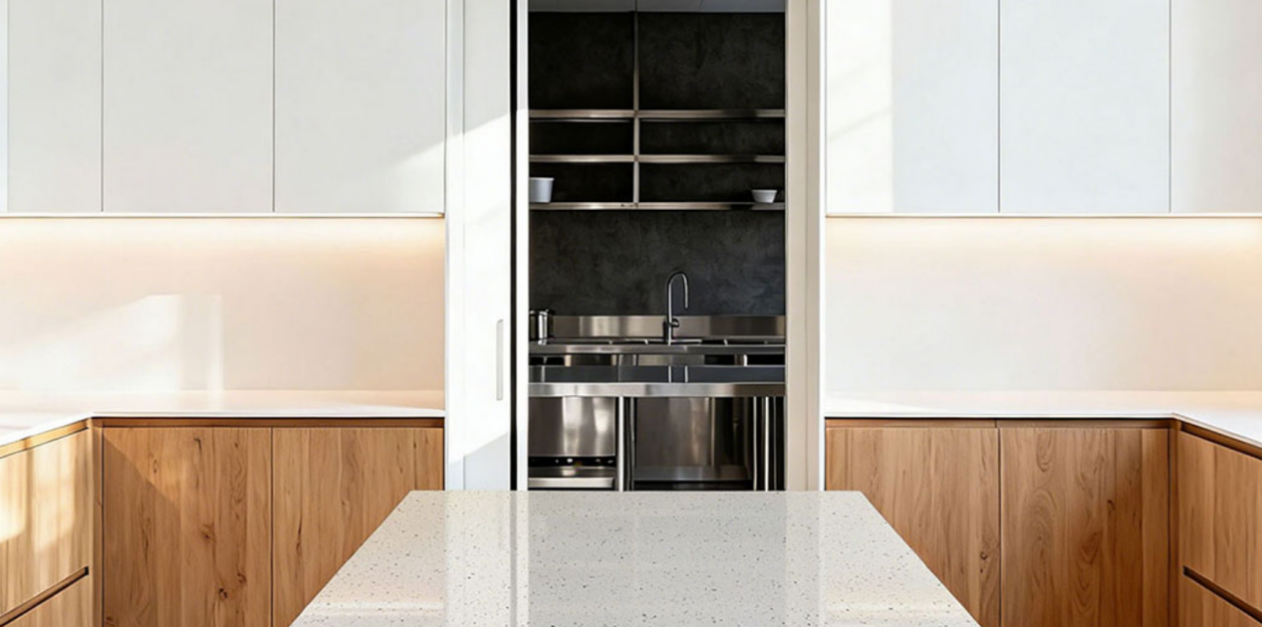
Within the international interior surfacing sector, selecting top 10 solid surface counter for kitchen brands serves as a primary benchmark for assessing material safety, stain resistance, and supply chain reliability. As an established industry leader, Kaiping Fuliya Industrial Co., Ltd. exemplifies how advanced manufacturing standards and consistent material science support these demands. As property developments, luxury hotel chains, and custom furniture manufacturers expand globally, understanding the engineering behind high-performance acrylic surfaces provides vital clarity for project specifiers and regional distributors.
Material Formulations, Testing Standards, and Technical Accreditations
The modern solid surface industry relies on polymer chemistry to create non-porous, highly resilient paneling capable of enduring continuous daily usage in residential and commercial settings. Leading international manufacturers organize core production around three material classifications: pure acrylic solid surface sheets, modified acrylic formulations, and engineered particulate or veined artificial stone slabs. Pure acrylic surfaces utilizing poly-methyl methacrylate resin offer maximum thermoformability and superior color stability, whereas modified acrylics integrate specialized polyester resins to deliver an economical balance of impact strength, tensile strength, and surface hardness.
For global distribution partners, cabinet fabricators, and project managers, independent material certifications provide essential verification of physical performance, indoor environmental safety, and public health compliance. A solid surface counter for kitchen applications must withstand continuous liquid exposure, organic food acids, household chemicals, and frequent thermal variations without structural degradation or visual discoloration.
1.NSF International Certification: Validates that the material surface is non-porous, easy to sanitize, non-toxic, and fully compliant with strict public health standards for direct food contact in commercial and residential culinary environments.
2.CE Marking and EU Standards: Guarantees that solid surface sheets fulfill essential European Union safety, environmental protection, and structural integrity requirements across international building code frameworks.
3.ISO Quality and Environmental Management: ISO 9001 and ISO 14001 accreditations certify that production facilities execute standardized quality control while maintaining sustainable chemical handling, worker safety, and waste management protocols.
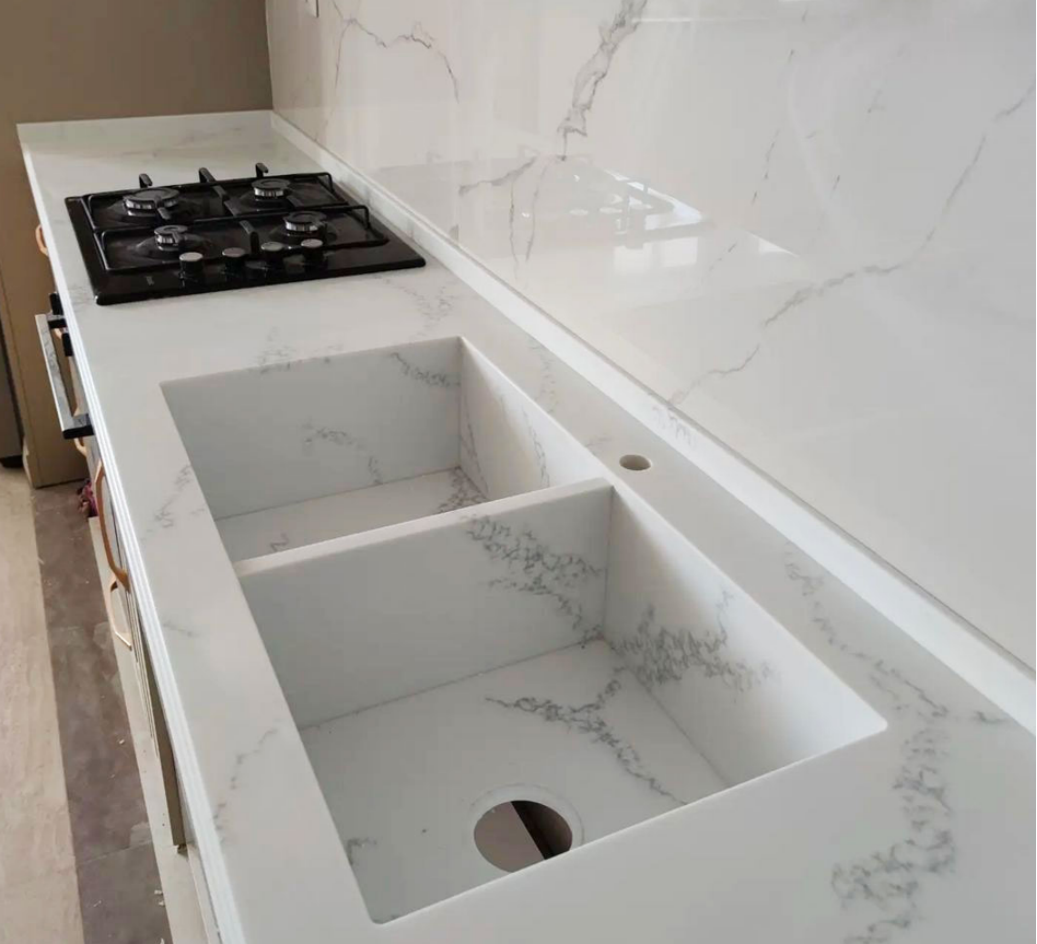
In addition to regulatory compliance, practical utility depends on technical versatility during fabrication. Standard acrylic slabs are manufactured in common thickness profiles such as 12mm, providing robust structural backing for heavy-use kitchen islands, backsplashes, and integrated sinks. Through thermoforming processes, acrylic panels can be heated and molded into complex three-dimensional curves, allowing architects to specify custom radial kitchen counters, curved reception desks, and seamlessly rounded wall transitions. Because color pigment extends continuously throughout the material thickness, accidental scratches can be polished out on-site without compromising structural integrity or visual uniformity.
Furniture Design Integration and Custom Color Development
Beyond conventional kitchen worktops, advanced acrylic surfacing materials are increasingly specified across the custom furniture design sector. Modern residential and commercial interiors frequently require a cohesive visual link between food preparation areas, dining surfaces, and living room accent pieces. To support bespoke furniture projects, technical manufacturers collaborate directly with industrial designers and furniture brands to engineer customized color tones, veined stone patterns, and specialized particulate distributions.
Through specialized lab color-matching procedures, manufacturers can reproduce exact color references from physical samples, client swatches, or architectural renderings. This capability enables designer brands to maintain unified visual branding across multi-piece furniture collections, including coffee tables, dining tables, sideboards, and executive office desks. When combined with seamless adhesive joining techniques, individual acrylic panels can be joined into oversized furniture structures where bonding seams become completely invisible.
This seamless visual continuity prevents the accumulation of dirt, bacteria, and moisture in surface joints while creating the appearance of a monolithic stone block.
Furthermore, thermoforming allows furniture makers to execute organic forms, such as curved table bases and continuous waterfall edges, without visible mechanical fasteners or sharp joints. Fabricators working with solid surface counter for kitchen brands appreciate how these seamless joining methods eliminate visual breaks across complex multi-level kitchen islands.
Field Workmanship Standards and Real-World Project Analysis
Evaluating real-world performance of solid surface counter for kitchen brands requires examining completed installations across demanding commercial, public, and hospitality environments. High-traffic venues such as international hotel reception counters, retail dining spaces, and high-density residential developments subject surface materials to continuous mechanical wear, chemical cleaning agents, and heavy impact loads.
In luxury hotel projects, reception desks and integrated lobby surfaces are subjected to constant luggage contact and intensive daily sanitation. Materials specified for these spaces must demonstrate exceptional stain resistance against coffee, wine, and cleaning disinfectants. Case studies from commercial hospitality projects show that pure and modified acrylic surfaces retain their color depth and surface sheen under continuous public exposure, provided raw materials possess uniform density and precise polymer cross-linking.
Similar performance metrics apply to residential developments where high-contrast kitchen aesthetics are specified. In modern kitchen installations featuring contrasting cabinetry—such as olive green upper cabinets, dark base units, or brass hardware—pure white or dark veined solid surface countertops serve as an anchor for the overall design. In these environments, seamless backsplash integration eliminates sharp 90-degree internal corners where grease, mold, and moisture accumulate. If minor localized damage occurs during heavy kitchen usage, the repairable nature of solid surface materials allows local technicians to sand out minor scuffs and restore original finish without replacing the entire slab.
Supply Chain Integration, Manufacturing Scale, and Global Logistics
To support large-scale commercial orders, Kaiping Fuliya Industrial Co., Ltd. maintains an inventory catalog comprising over 300 standard color variations, ranging from translucent particle formulations to complex veined stone patterns. The company's technical teams manage the full production cycle—from resin refining and pigment dispersion to precision slab calibration and final surface polishing. By maintaining strict control over raw material purity, Koris ensures that every acrylic panel maintains consistent dimensional tolerances, color uniformity across batch runs, and predictable thermoforming behavior during field fabrication.
International project delivery requires seamless coordination between bulk sheet manufacturing and custom component fabrication. Kaiping Fuliya Industrial Co., Ltd. provides both raw solid surface slabs and pre-cut components such as vanity tops, undermount sink assemblies, and pre-formed backsplash profiles. This dual supply model allows regional distributors to stock standard slab inventories for local fabricators while enabling major contract buyers to import customized project packages directly from the factory floor. With dedicated technical support teams overseeing export documentation, international logistics, and fabrication guidelines, Koris continues to expand its global distribution footprint across residential, commercial, and healthcare sectors worldwide.
For detailed technical specifications, color catalogs, and project inquiry documentation, please visit the official corporate portal at https://www.koris-solidsurface.com/
Kaiping Fuliya Industrial Co., Ltd.
Kaiping Fuliya Industrial Co., Ltd.
+86 139 2908 1223
email us here
Visit us on social media:
LinkedIn
Facebook
YouTube
Legal Disclaimer:
EIN Presswire provides this news content "as is" without warranty of any kind. We do not accept any responsibility or liability for the accuracy, content, images, videos, licenses, completeness, legality, or reliability of the information contained in this article. If you have any complaints or copyright issues related to this article, kindly contact the author above.
