

EU Fertility Supplements Market to Hit USD 559.6 Billion by 2036 | Global Growth Led by Garden of Life, Thorne Research
Fertility Supplements Market in EU
EU fertility supplements demand rises with delayed parenthood, clinical adoption, and growing preference for personalized reproductive nutrition solutions.
NEWARK, DE, UNITED STATES, March 31, 2026 /EINPresswire.com/ -- According to analysis by Future Market Insights (FMI), the EU fertility supplements market is entering a phase of sustained expansion as delayed parenthood trends, clinical protocol adoption, and rising reproductive health awareness collectively reshape demand dynamics, pricing strategies, and competitive positioning.
Increasing consumer inclination toward proactive fertility management—supported by growing use of multi-supplement regimens including CoQ10, folate, prenatal vitamins, and herbal formulations—is transforming fertility supplements from optional wellness products into medically motivated, high-compliance nutritional solutions. At the same time, brands are leveraging clinical validation, healthcare endorsements, and regulatory-compliant claims to strengthen credibility and premium positioning.
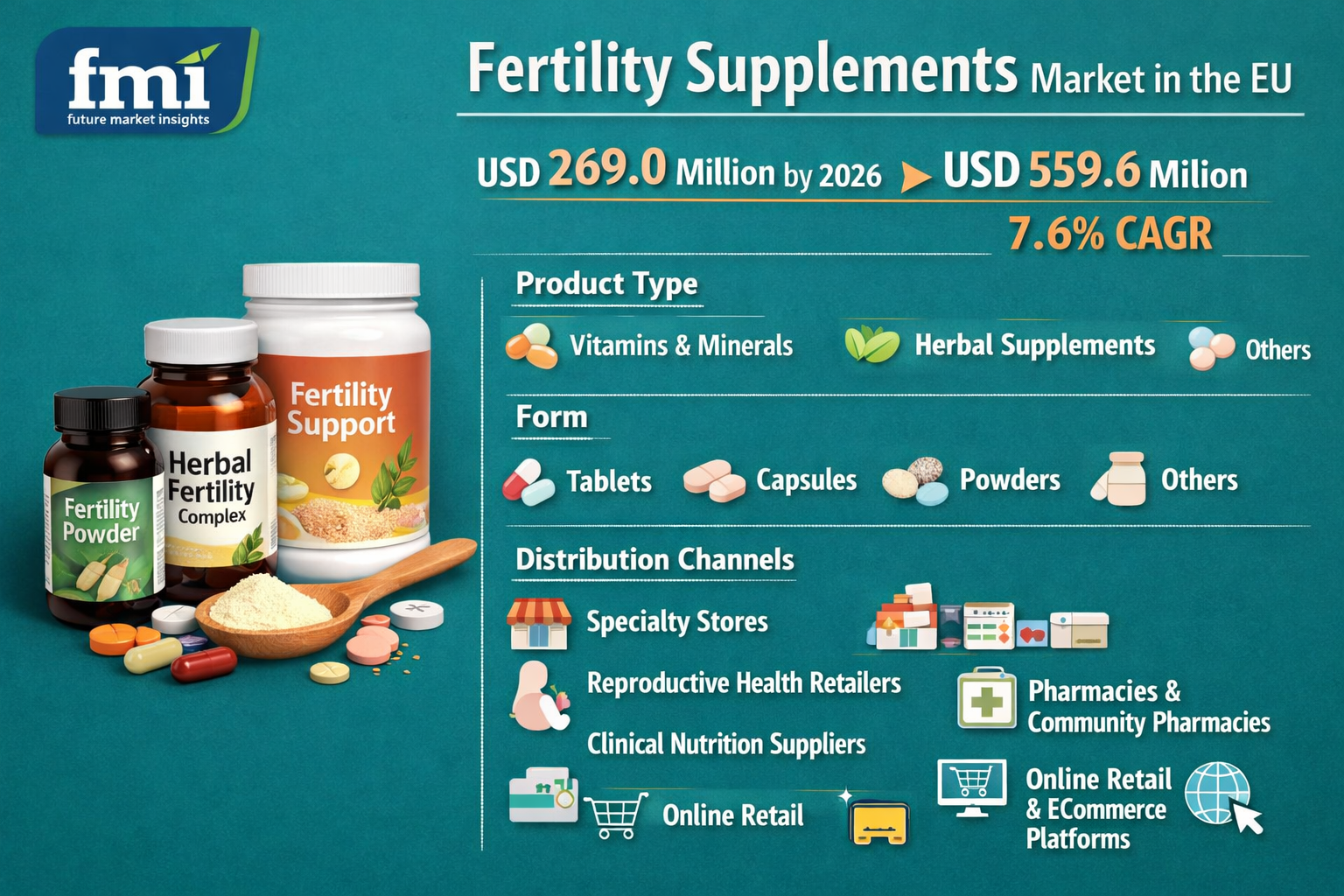
The market was valued at USD 101.5 million in 2025 and is projected to reach USD 269.0 million in 2026. Over the forecast period, demand is expected to grow at a CAGR of 7.6%, ultimately reaching USD 559.6 million by 2036.
This growth trajectory reflects both expanding consumer adoption and increasing per-user spending, particularly in clinically positioned multi-nutrient formulations recommended by fertility specialists.
To Explore Detailed Market Data, Segment-Wise Forecasts, and Competitive Insights, Request Sample Report - https://www.futuremarketinsights.com/reports/sample/rep-gb-27169
Fertility Supplements Market Snapshot (EU)
• Market Value (2025): USD 101.5 Million
• Forecast Value (2036): USD 559.6 Million
• Forecast CAGR (2026–2036): 7.6%
• Leading Product Type: Vitamins & Minerals (50.0% share)
• Top Form Segment: Tablets (33.8% share)
• Fastest Growing Market: Spain
Clinical Positioning and Multi-Supplement Adoption Drive Market Expansion
A key force shaping the EU fertility supplements market is the integration of clinical nutrition into reproductive healthcare protocols. Fertility supplements are increasingly recommended by reproductive specialists as part of pre-conception and IVF preparation strategies.
This shift is enabling brands to command premium pricing while improving compliance rates, as fertility supplementation is perceived as medically necessary rather than discretionary. Multi-nutrient formulations combining zinc, selenium, folate, and antioxidants are gaining strong traction due to their role in supporting reproductive outcomes.
Additionally, the growing awareness of male fertility health, including sperm quality and motility, is expanding the consumer base beyond women, further accelerating category growth.
Regulatory Framework Shapes Market Communication
The EU fertility supplements market operates under Directive 2002/46/EC, which governs dietary supplements, while Regulation 1924/2006 restricts health claims.
This regulatory environment requires brands to carefully align marketing language with EFSA-approved claims, such as:
• Zinc contributes to normal fertility and reproduction
• Folate contributes to maternal tissue growth during pregnancy
As a result, companies must balance scientific communication with compliance, making regulatory expertise a critical competitive differentiator in the EU market.
Demographic Shifts and Healthcare Integration Strengthen Demand
The steady rise in the average age at first birth across EU countries (around 30 years) is a major structural driver of market growth. This demographic shift is expanding the addressable consumer base, as more individuals seek fertility support solutions later in life.
Simultaneously, fertility supplements are increasingly integrated into clinical treatment pathways, supported by organizations such as reproductive health societies and fertility clinics. This integration is enhancing product credibility, extending usage duration (6–24 months), and improving overall market penetration.
Segmental Leadership: Vitamins & Minerals and Tablets
By product type, vitamins & minerals dominate with a 50.0% market share in 2026, driven by strong clinical backing and standardized nutrient protocols in fertility care. Key ingredients include folic acid, zinc, selenium, and vitamin D.
By form, tablets lead with a 33.8% share, supported by widespread availability, cost efficiency, and familiarity among consumers. However, capsules are gaining traction due to perceived advantages in bioavailability and ease of consumption.
Country-Level Growth Insights
Growth across EU countries reflects varying levels of healthcare integration and fertility awareness:
• Spain: 7.9% CAGR (fastest growth)
• Netherlands: 7.4% CAGR
• Italy: 7.2% CAGR
• Germany: 6.8% CAGR
• France: 6.5% CAGR
Spain leads due to rapid expansion of fertility clinics and rising awareness, while Germany maintains strong demand supported by its advanced healthcare infrastructure and evidence-based medical practices.
Personalized Nutrition and Clinical Validation Create New Opportunities
The market is witnessing strong momentum in personalized fertility nutrition, where supplements are tailored based on individual health conditions, deficiencies, and reproductive goals.
Key innovation areas include:
• Personalized nutrient formulations
• Clinical validation and biomarker-based products
• Integration with digital health platforms
• Subscription-based supplement delivery models
These advancements are enhancing patient outcomes while strengthening long-term customer engagement and retention.
Sustainability and Clean Label Trends Gain Importance
European consumers are increasingly prioritizing clean-label and sustainably sourced supplements, driving manufacturers to adopt:
• Organic and traceable ingredient sourcing
• Environmentally friendly manufacturing processes
• Transparent labeling and certifications
This trend is particularly strong in countries such as Germany, France, and the Netherlands, where consumers are willing to pay a premium for sustainable and clinically validated products.
Competitive Landscape
Leading companies in the EU fertility supplements market include:
• Garden of Life
• Thorne Research
• Fertility Nutraceuticals
• Nature’s Way
• New Chapter
• Vitafusion
• Zahler
• MediNatura
• Carlyle
• European regional producers
These players are focusing on clinical research, product innovation, regulatory compliance, and healthcare partnerships to strengthen their market presence.
Market Outlook: Clinical Nutrition Becomes Core to Fertility Care
The long-term outlook for the EU fertility supplements market remains positive, driven by demographic shifts, increasing clinical integration, and rising awareness of reproductive health.
However, regulatory constraints on health claims and competition from lower-cost private-label products may influence pricing dynamics.
As the market evolves, future leaders will be those that successfully combine clinical validation, personalized nutrition, and regulatory compliance to deliver high-value, differentiated fertility solutions tailored to modern European healthcare needs.
Browse More Reports from Food and Beverages:
Poultry Feed Market: https://www.futuremarketinsights.com/reports/poultry-feed-market
Baijiu Market: https://www.futuremarketinsights.com/reports/baijiu-market
Gelato Market: https://www.futuremarketinsights.com/reports/gelato-market
Flavors Market: https://www.futuremarketinsights.com/reports/flavors-market
Sudip Saha
Future Market Insights Inc.
+ +1 347-918-3531
email us here
Legal Disclaimer:
EIN Presswire provides this news content "as is" without warranty of any kind. We do not accept any responsibility or liability for the accuracy, content, images, videos, licenses, completeness, legality, or reliability of the information contained in this article. If you have any complaints or copyright issues related to this article, kindly contact the author above.
